Industrie
Traitement des eaux usées de finition de métaux
Traitement axé sur la conformité pour les installations de placage, d'anodisation et de fabrication de métaux en Amérique du Nord.
🤖 Aperçu IA
Les eaux usées de finition de métaux contiennent du chrome hexavalent, du nickel, du zinc, du cyanure et des métaux complexés qui nécessitent un traitement physico-chimique spécialisé. BioTerraVa conçoit des systèmes de traitement qui atteignent <0,1 mg/L pour tous les métaux réglementés tout en minimisant les coûts chimiques et la production de boues.
Défis industriels
Metal Finishing Effluent Challenges
Metal finishing operations generate concentrated wastewater streams with multiple toxic contaminants. EPA categorical standards (40 CFR 413/433) set strict limits for hexavalent chromium (<0.05 mg/L), cadmium (<0.01 mg/L), and cyanide (<1.0 mg/L) that challenge conventional treatment.
- Hexavalent chromium requiring chemical reduction before precipitation
- Complexed metals (chelated, EDTA-complexed) resistant to hydroxide precipitation
- Cyanide destruction required before metals precipitation
- Variable batch discharges creating treatment surges
- Stringent EPA categorical standards with low metals limits
Solutions BioTerraVa
Metal Finishing Treatment Solutions
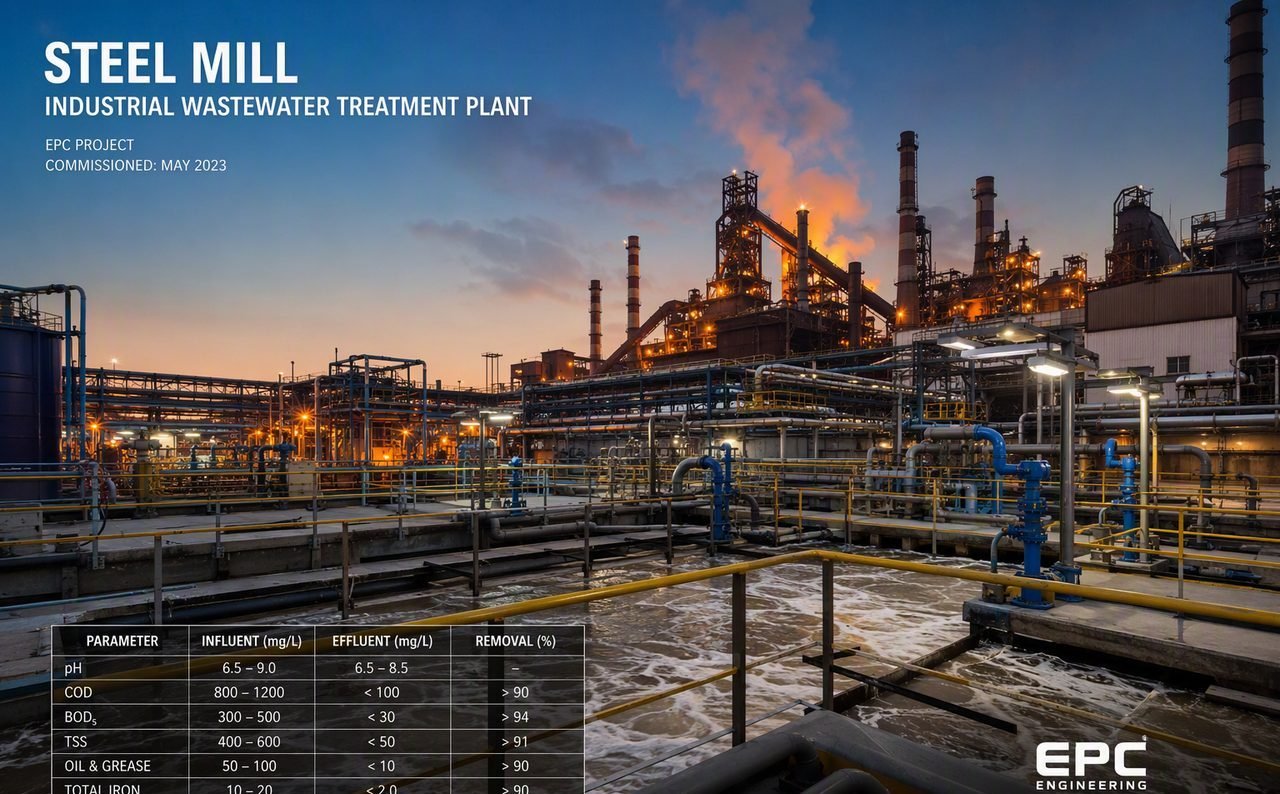
BioTerraVa designs multi-stage treatment trains for metal finishing wastewater: cyanide destruction, hexavalent chromium reduction, chemical precipitation, solids separation, and polishing. Our systems consistently achieve effluent quality below EPA categorical standards.
- Two-stage cyanide destruction (alkaline chlorination or peroxide oxidation)
- Hexavalent chromium reduction with sodium metabisulfite or ferrous sulfate
- Chemical precipitation with caustic soda or lime at optimized pH
- Clarifier or DAF for solids separation
- Ion exchange or mineral media polishing for <0.1 mg/L metals
Conformité
Metal Finishing Compliance Standards
Metal finishing facilities in the US are subject to EPA categorical standards under 40 CFR 413 (electroplating) and 40 CFR 433 (metal finishing). In Canada, provincial regulations and municipal sewer bylaws apply.
- EPA 40 CFR 413 (electroplating point source category)
- EPA 40 CFR 433 (metal finishing point source category)
- Ontario Regulation 537/93 industrial sewage works
- Municipal sewer-use bylaws with metals limits
- Provincial water quality standards for direct dischargers
Étude de cas
Electroplater Achieves Zero Discharge Violations in 3 Years
Problème : An electroplating facility in Michigan was averaging 3-4 NPDES violations per year for chromium and nickel exceedances. Fines totaled $180,000 over 5 years. The existing batch treatment system was undersized and poorly automated.
Solution : BioTerraVa designed a continuous-flow treatment train: equalization + chromium reduction + cyanide destruction + chemical precipitation + clarifier + ion exchange polishing. Full automation with online metals analyzers.
Résultats : Zero violations in 36 months of operation. Chromium <0.02 mg/L (limit 0.05). Nickel <0.05 mg/L (limit 0.10). Chemical costs reduced 25% through optimized dosing. Operator labour reduced 30% through automation.
Obtenez une évaluation gratuite pour votre installation
Parlez avec un ingénieur principal au sujet de vos défis d'effluents spécifiques.
Réservez une consultation gratuite de 30 minutes →Ressources connexes
FAQ
Questions fréquemment posées
How to treat electroplating wastewater?
Electroplating wastewater requires multi-stage treatment: (1) Equalization to buffer batch discharges, (2) Cyanide destruction by alkaline chlorination, (3) Hexavalent chromium reduction to trivalent chromium, (4) Chemical precipitation of metals as hydroxides at pH 8.5-9.5, (5) Solids separation by clarifier or DAF, and (6) Polishing by ion exchange or adsorption for <0.1 mg/L effluent. BioTerraVa designs automated systems that handle variable loads while maintaining consistent compliance.
What are EPA categorical standards for metal finishing?
EPA categorical standards for metal finishing (40 CFR 433) set technology-based effluent limits for: total toxic organics (TTO), total suspended solids (TSS), oil & grease, and specific metals (chromium, cadmium, copper, lead, nickel, silver, zinc). Daily maximum and monthly average limits apply. For electroplating (40 CFR 413), additional limits apply for cyanide and specific metals. BioTerraVa designs systems that achieve 50% below these limits for compliance margin.
How to remove hexavalent chromium from wastewater?
Hexavalent chromium (Cr6+) must be chemically reduced to trivalent chromium (Cr3+) before precipitation. Common reducing agents: sodium metabisulfite (fast, effective), ferrous sulfate (lower cost, generates more sludge), or sulfur dioxide gas (industrial scale). Reduction occurs at pH 2.5-3.0 with 15-30 minutes contact time. After reduction, pH is raised to 8.5-9.0 to precipitate Cr(OH)3. BioTerraVa designs automated reduction systems with ORP control for consistent results.
Parlez avec un P.Eng. qui fait cela depuis 36 ans
Domestique ou industriel, municipal ou communauté autochtone — la première consultation de 30 minutes est gratuite.
Réservez votre consultation gratuite →