Conformité
Réduction des surtaxes d'égouts de l'Ontario
Réduisez ou éliminez les surtaxes d'égouts municipaux par un traitement optimisé des eaux usées et une efficacité de procédé.
🤖 Aperçu IA
Les municipalités de l'Ontario facturent des surtaxes d'égouts de 0,50 à 2,50 $ par kg de DBO et SSB au-dessus des limites permises. Pour les rejeteurs industriels à haute concentration, ces surtaxes peuvent dépasser 150 000 $ annuellement. BioTerraVa conçoit des systèmes de traitement qui éliminent ou réduisent considérablement les surtaxes tout en améliorant l'efficacité globale du procédé.
Défis réglementaires
The High Cost of Sewer Surcharges
Municipal sewer surcharges are a major operating cost for Ontario industries. A food processor discharging 500 m³/d at 1,000 mg/L BOD (vs. 300 mg/L limit) pays $150,000+ annually in surcharges — money that could be invested in treatment upgrades.
- Surcharge rates of $0.50-$2.50 per kg BOD/TSS above limits
- Toronto rates among highest at ~$1.80/kg BOD
- Annual surcharges of $50,000-$500,000 for high-strength dischargers
- Surcharges increasing annually with municipal budget pressures
- Limited ability to pass costs to customers in competitive markets
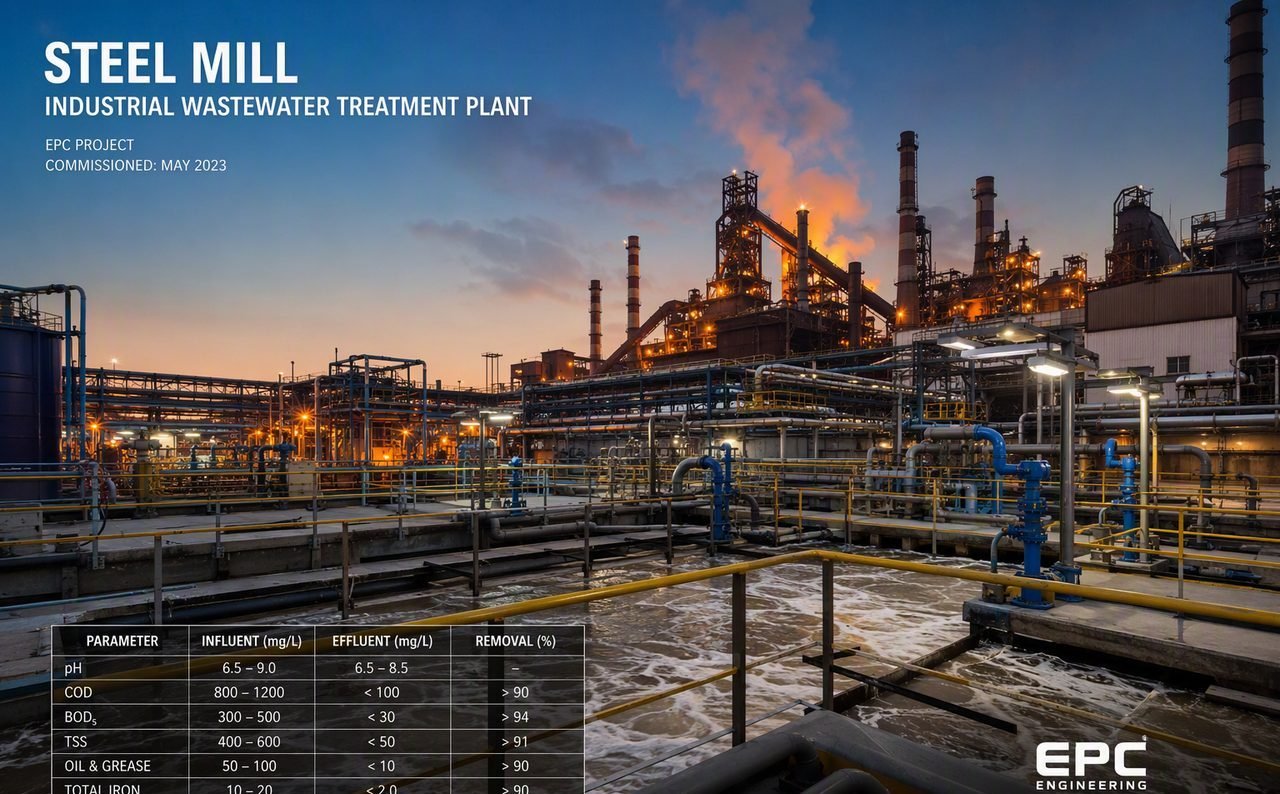
Services de conformité BioTerraVa
Surcharge Reduction Strategies
BioTerraVa designs treatment upgrades that target the specific contaminants driving surcharges. Our approach prioritizes the highest-ROI upgrades first, with phased implementation to match budget cycles.
- DAF or primary treatment for immediate TSS and oil reduction
- MBBR biological treatment for BOD/COD removal to below surcharge thresholds
- Nutrient recovery for phosphorus compliance in Great Lakes basin
- Water reuse to reduce total discharge volume
- Automated monitoring to prevent excursion-driven surcharge events
Ressources connexes
Industries
FAQ
Questions fréquemment posées
How are sewer surcharges calculated in Ontario?
Ontario sewer surcharges are calculated based on the mass of BOD and TSS discharged above the permitted limits. Formula: Surcharge = (Measured Concentration - Limit) × Flow × Rate. For example, a facility discharging 500 m³/d with BOD of 1,000 mg/L (limit 300 mg/L) at Toronto's rate of $1.80/kg pays: (1,000-300) mg/L × 500 m³/d × $1.80/kg = $230/day or $84,000/year for BOD alone. TSS surcharges are calculated similarly.
How to reduce BOD in industrial wastewater?
Industrial BOD is reduced through: (1) Primary treatment (DAF, sedimentation) for solids and oil removal, (2) Biological treatment (activated sludge, MBBR, MBR) for organic matter breakdown, (3) Equalization to prevent shock loads, and (4) Process optimization to reduce BOD at the source. For food and beverage wastewater with BOD >1,000 mg/L, MBBR is often the most cost-effective biological option. BioTerraVa designs systems that achieve BOD <200 mg/L, eliminating most surcharge exposure.
What is the payback period for surcharge reduction upgrades?
Surcharge reduction upgrades typically pay back in 1.5-4 years depending on current surcharge costs and treatment complexity. For facilities paying $100,000+/year in surcharges, simple DAF upgrades may pay back in <2 years. More complex biological upgrades (MBBR, MBR) typically pay back in 2.5-4 years but deliver additional benefits: compliance improvement, water reuse capability, and sludge reduction. BioTerraVa provides detailed ROI analysis for each upgrade option.
Parlez avec un P.Eng. qui fait cela depuis 36 ans
Obtenez une consultation gratuite de 30 minutes. Réponse sous 1 jour ouvrable, sans obligation.
Réservez votre consultation gratuite →